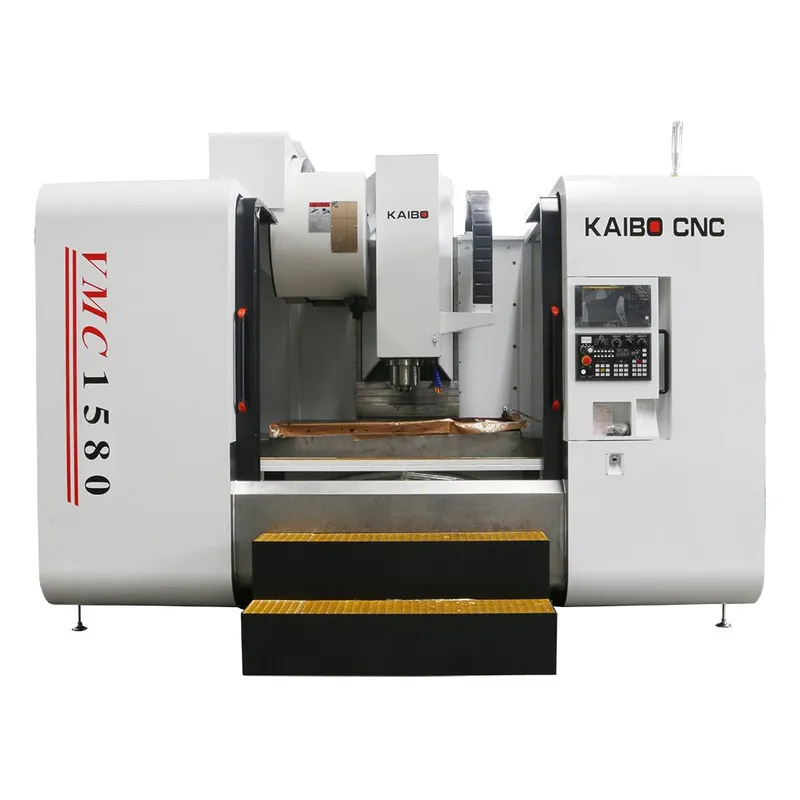
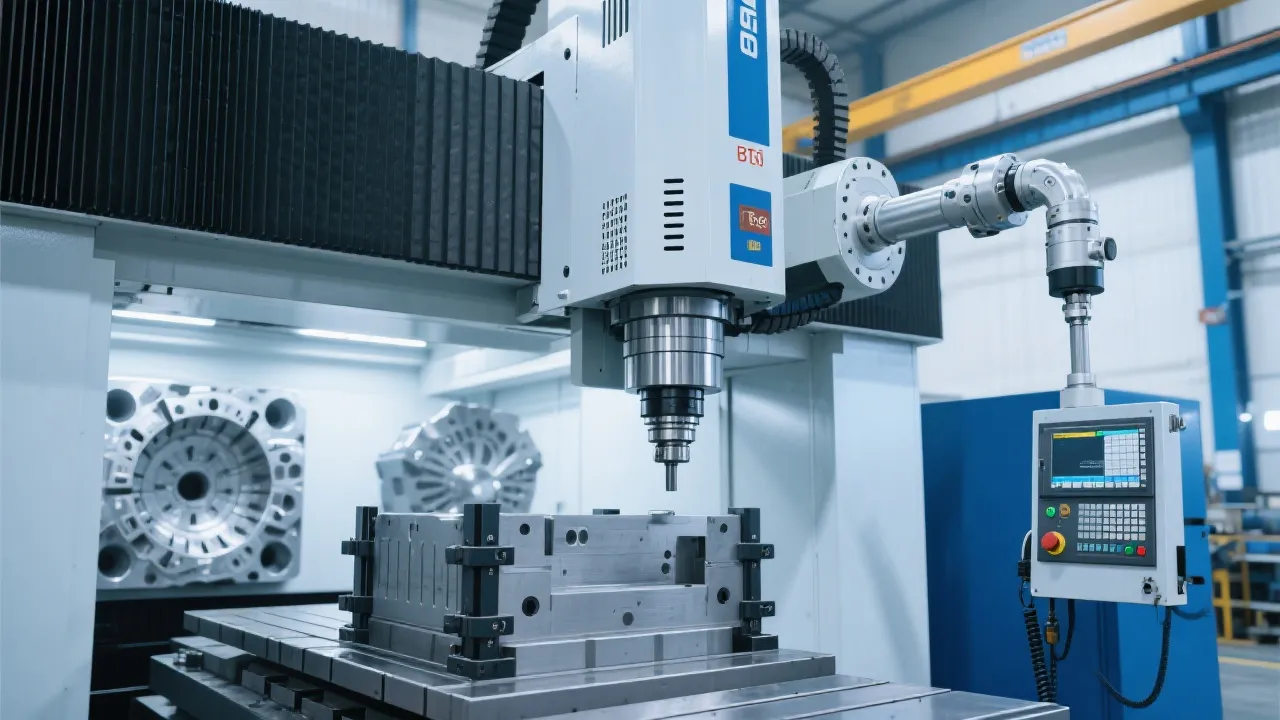
Vertical machining centers (VMCs) equipped with 3, 4, or 5-axis capabilities represent advanced solutions in modern manufacturing, greatly enhancing precision and versatility. Ningbo Kaibo CNC Machinery Co., Ltd., a leader in CNC machine tool innovation, offers comprehensive expertise in these machining centers, enabling manufacturers worldwide to optimize production efficiency and quality.
A 3-axis VMC operates along the X, Y, and Z linear axes. This configuration is ideal for conventional milling, drilling, and boring operations where the cutting tool moves along these three perpendicular directions. It offers high rigidity and accuracy, suitable for many standard manufacturing tasks.
The 4-axis VMC adds a rotational axis (usually the A-axis), enabling the workpiece to rotate around one axis during machining. This additional degree of freedom allows for more complex geometries and improved surface finishes, reducing the need for multiple setups.
5-axis VMCs incorporate two rotational axes in addition to the three linear axes. This configuration facilitates simultaneous multi-axis machining, greatly expanding the scope of manufacturable complex parts with intricate contours. It enhances machining precision and reduces cycle times, making it indispensable for aerospace, automotive, and mold-making industries.
All these vertical machining centers share core components such as the spindle, worktable, and control system. Differences arise in the integration of rotary axes, tooling strategies, and machine kinematics.
| Feature | 3-Axis VMC | 4-Axis VMC | 5-Axis VMC |
|---|---|---|---|
| Axes of Movement | X, Y, Z (linear) | X, Y, Z + A (rotary) | X, Y, Z + A, B (dual rotary) |
| Typical Applications | Standard milling and drilling | Moderately complex contouring | Complex surfaces and 3D sculpting |
| Setup Flexibility | Limited | Improved | Highest |
| Cost Considerations | Most economical | Moderate investment | Higher initial investment |
Different axis configurations serve distinct manufacturing needs:
Selecting between 3, 4, and 5-axis vertical machining centers involves balancing production requirements, budget, complexity, and desired precision.
Key considerations include:
- Part complexity and geometric demands
- Production volume and cycle time expectations
- Available technical expertise and programming capabilities
- Long-term scalability and maintenance support
Ningbo Kaibo CNC Machinery leverages its extensive experience in machine tool innovation and customer service to provide tailored solutions that align with these factors. Our range of 3/4/5-axis vertical machining centers stands ready to empower manufacturing enterprises with efficient, reliable, and technologically advanced equipment.