
In the world of precision machining, three-axis vertical machining centers have long been the standard. However, as the demand for more complex and high - precision parts grows, these traditional machines are hitting efficiency bottlenecks. For instance, in the production of graphite electrodes and aviation blades, three - axis machines often require multiple setups, leading to longer production times and potential inaccuracies. This is where five - axis vertical machining centers come into play as a necessary solution.
The differences between three - axis and five - axis vertical machining centers are significant. In terms of setup times, three - axis machines typically need to re - position the workpiece multiple times to access different sides, increasing the risk of misalignment. On the contrary, five - axis machines, with their advanced RTCP (Rotated Tool Center Point) function, can achieve multi - sided machining with a single setup. This not only reduces setup times but also enhances positioning accuracy.
Path optimization is another area where the gap is evident. Five - axis machines can generate more efficient tool paths, allowing for smoother and faster machining. Moreover, in terms of thermal stability, five - axis machines are often better designed to handle the heat generated during long - term machining, which helps maintain consistent accuracy.
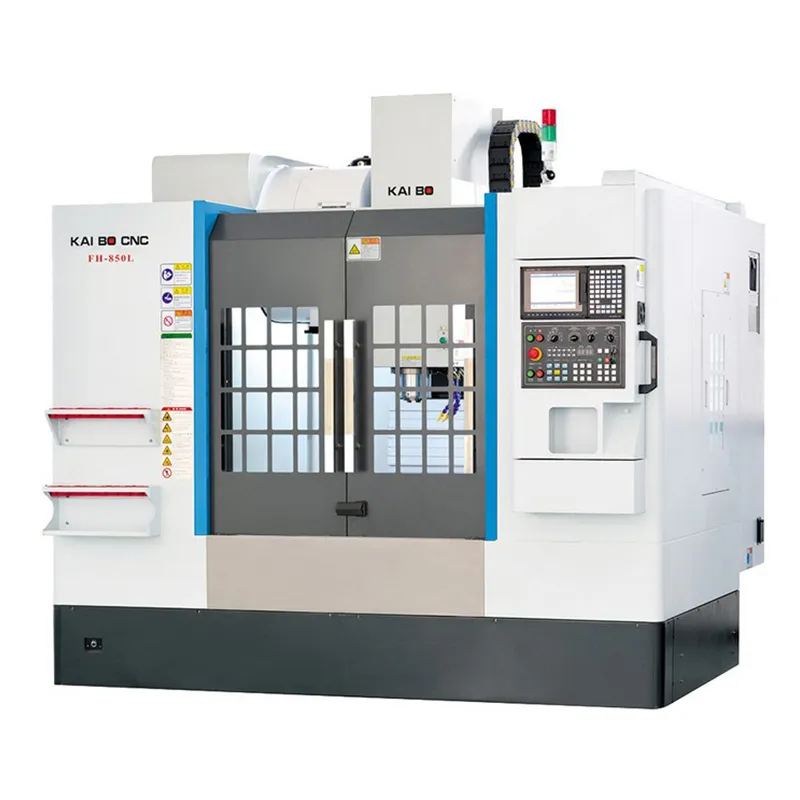
The FH855L model of five - axis vertical machining centers shows remarkable performance in graphite material processing. It offers excellent repeat positioning accuracy, which is crucial for producing high - precision graphite electrodes. Additionally, it has a strong adaptability to thin - walled parts. In graphite machining, thin - walled parts are prone to deformation, but the FH855L can minimize this issue, ensuring the integrity of the final product.
Real - world customer data provides solid evidence of the advantages of five - axis vertical machining centers. For example, one customer reported a 9% increase in the yield rate after switching from a three - axis to a five - axis machine. This means fewer defective products and higher production efficiency. Another significant improvement is the reduction in tool change time. Customers have seen up to a 40% decrease in tool change time, which directly translates to more productive machining hours.
Let's take a look at a comparison table:
| Indicator | Three - Axis Machine | Five - Axis Machine |
|---|---|---|
| Yield Rate | 80% | 89% |
| Tool Change Time | 10 minutes | 6 minutes |
Upgrading to a five - axis vertical machining center can bring comprehensive improvements to production quality and delivery cycles. By reducing setup times, improving accuracy, and increasing yield rates, manufacturers can produce high - quality products more quickly. This is particularly important in industries such as new energy batteries and precision molds, where the demand for high - precision parts is constantly rising.
In conclusion, for businesses looking to stay competitive in the high - precision machining market, the transition from three - axis to five - axis vertical machining centers is a strategic decision that can lead to significant benefits. Don't miss out on this opportunity to enhance your production efficiency and quality. Explore our five - axis vertical machining centers now!



 <#else>





