
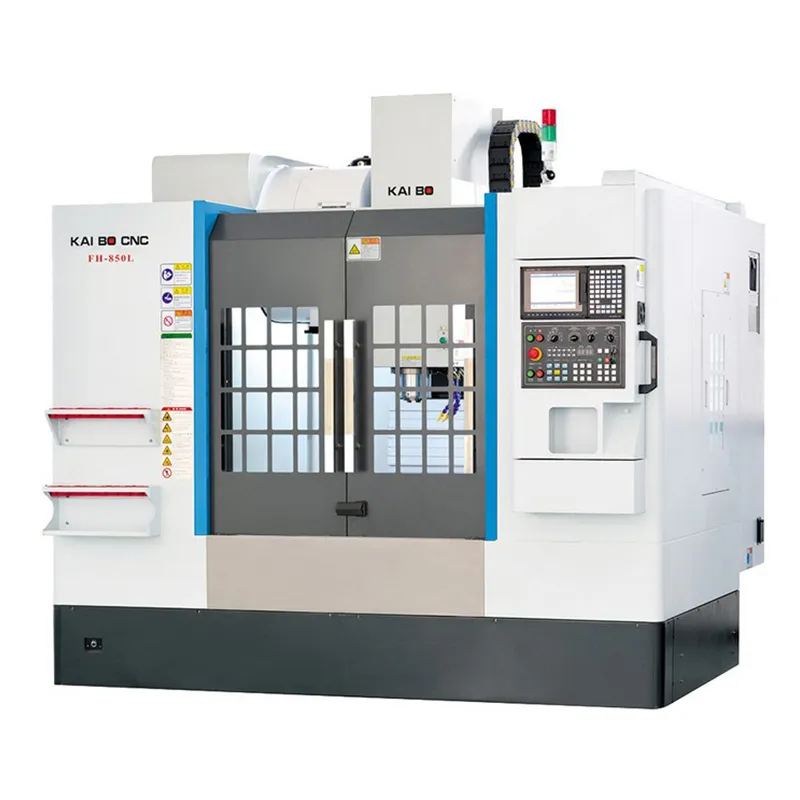
In the manufacturing industry, the question of why traditional three - axis equipment struggles to handle the machining of complex parts made of graphite materials has puzzled many engineers. This article offers an in - depth analysis of how the five - axis vertical machining center, such as the FH855L RTCP model, can achieve higher efficiency and a better yield rate by optimizing tool paths, reducing clamping times, and improving positioning accuracy.
When it comes to machining complex geometries, the differences between three - axis and five - axis equipment are significant. Let's take a look at the actual performance of key indicators such as surface finish, tool change time, and positioning repeatability accuracy. In terms of surface finish, five - axis machines can often achieve a smoother surface, which is crucial for high - end applications. Regarding tool change time, data from some case studies shows that five - axis machines can reduce it by up to 40%, compared to traditional three - axis machines. The positioning repeatability accuracy of five - axis machines is also notably higher, which directly affects the quality of the final product.
Graphite materials have unique characteristics. Five - axis vertical machining centers demonstrate excellent thermal stability, which is essential when processing graphite due to the heat generated during machining. Moreover, they are highly adaptable to thin - walled structures. For example, in the production of thin - walled graphite parts used in the new energy battery industry, five - axis machines can better handle the challenges posed by the material's properties, ensuring high - quality production.
To enhance the credibility of our analysis, let's look at some real - world customer success stories. In an aerospace manufacturing company, after switching to a five - axis vertical machining center (FH855L RTCP model), the yield rate of their thin - walled structural parts increased to 95%. This significant improvement not only reduced production costs but also improved their competitiveness in the market. Additionally, the tool change time was shortened by 40%, which directly translated into higher production efficiency.
The RTCP (Rotated Tool Center Point) function is a game - changer in the field of five - axis machining. It simplifies the programming process, making it more accessible for engineers. By using RTCP, the programming time can be reduced, and the machining consistency can be greatly improved. This function ensures that the tool's center point remains constant during rotation, which is particularly important for complex surface machining.
In today's manufacturing industry, the transformation from traditional manufacturing to intelligent manufacturing is inevitable. Five - axis vertical machining centers play a crucial role in this process. They help manufacturing enterprises break through efficiency bottlenecks and move towards a more intelligent and efficient production model. Are you also facing challenges in machining complex parts? Do you want to improve your production efficiency and product quality?
If you're looking to upgrade your manufacturing technology and stay competitive in the market, the five - axis vertical machining center is the answer. Click here to learn more about how our five - axis vertical machining centers can solve your production pain points and bring sustainable competitiveness to your business.



 <#else>





